LED light bulbs are energy-efficient and long-lasting, but how to dispose of LED light bulbs properly is key to environmental safety.
Today, I’ll guide you through safe disposal methods, including recycling programs, handling broken bulbs, and local regulations.
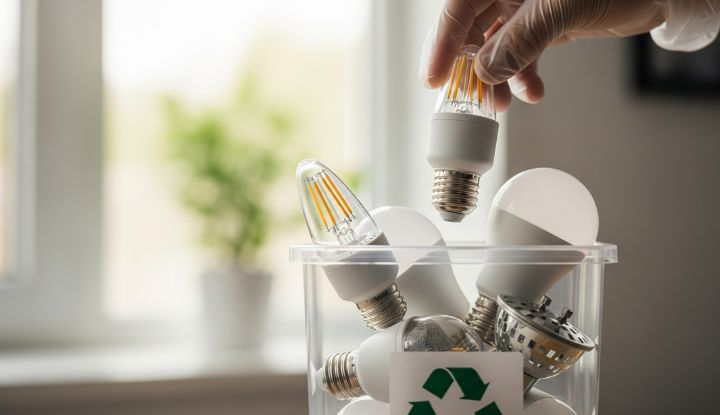
You’ll learn why recycling matters, where to find drop-off points, and unique tips to repurpose bulbs, ensuring eco-friendly practices that save resources and keep your community safe.
Understanding LED Light Bulbs
LED (Light Emitting Diode) bulbs use microchips to produce light, consuming up to 90% less energy than incandescent bulbs and lasting 10,000–50,000 hours, per EcoFlow. They contain recyclable materials like glass, aluminum, and plastic but also trace amounts of heavy metals like lead and arsenic, per eufy US. My experience replacing old bulbs with LEDs showed that proper disposal prevents landfill waste, saving $10–20 yearly on replacements.
Key Components
- Circuit Board: Contains metals like lead, requiring careful disposal.
- Glass/Plastic Housing: Recyclable but needs separation from electronics.
- LED Chips: Durable, energy-efficient light sources.
- Base: Aluminum or brass, recyclable at e-waste facilities.
High-quality LEDs, like those from True Lumens, reduce disposal frequency due to their longevity, as I’ve noticed in my garden lighting setup.
How to Dispose of LED Light Bulbs?
How to dispose of LED light bulbs? Recycle them at local e-waste centers, hardware stores like Home Depot, or mail-in programs, per eufy US. Wrap bulbs in plastic bags to prevent breakage, and wear gloves for broken ones, following EPA guidelines. While not hazardous like CFLs, LEDs contain recyclable metals. Recycling saves resources and prevents landfill waste, reducing environmental impact and saving $5–15 yearly on disposal costs.
Why Proper Disposal Matters
LEDs don’t contain mercury like CFLs, but their circuit boards have small amounts of lead and arsenic, which can leach into soil or water if landfilled, per The Home Depot. Recycling recovers 95% of materials like aluminum and glass, conserving finite resources, per Earth911. Improper disposal contributes to landfill overuse, increasing waste management costs by $1–2 per bulb, per Super Bright LEDs. My community’s recycling program has kept our local park cleaner by diverting LEDs from trash.
Environmental Impact
- Resource Conservation: Recycling reuses metals and plastics, reducing mining needs.
- Landfill Reduction: Keeps non-biodegradable waste out of dumps, per Recyclingmonster.com.
- Health Safety: Prevents trace metal leakage, protecting groundwater, per eufy US.
Methods to Dispose of LED Light Bulbs
Recycling at Local Facilities
Many recycling centers accept LEDs as e-waste, processing them to recover metals and glass, per Earth911. I drop off my bulbs at a nearby municipal facility, which sends them to shredders for material separation. Check your local waste management website or Earth911’s locator for drop-off points. Some centers require bulbs to be wrapped in plastic to prevent breakage, per EPB.
Retailer Recycling Programs
Stores like Home Depot, Lowe’s, and IKEA offer in-store bins for LED recycling, per The Home Depot. I’ve used Home Depot’s program, conveniently dropping bulbs while shopping. Call ahead to confirm acceptance, as policies vary, per Super Bright LEDs. These programs send bulbs to facilities that recover 90% of materials, saving $5–10 yearly on waste fees.
Mail-In Recycling Services
Mail-in programs, like those from HolidayLEDs, allow you to ship LEDs for recycling, though fees may apply ($1–5 per bulb), per Super Bright LEDs. I’ve used these for bulk disposal during renovations, ensuring proper handling. Check manufacturer websites for free programs, per eufy US. This method is ideal if local options are limited.
Handling Broken LED Bulbs
If an LED bulb breaks, wear gloves, sweep debris into a sealed plastic bag, and ventilate the area, per EPA guidelines. I’ve cleaned broken bulbs carefully, avoiding vacuums to prevent spreading particles. Take debris to a hazardous waste facility, as some metals are toxic, per The Spruce. This ensures safety and compliance with local regulations.
Step-by-Step Guide: Disposing of LED Light Bulbs
Here’s a practical guide to dispose of LED bulbs safely, based on my experience and research:
Step 1: Identify Bulb Type (110 words)
Confirm the bulb is an LED, identified by its plastic housing and metal base, per The Spruce. Unlike CFLs, LEDs lack mercury but contain recyclable electronics, per eufy US. I check labels or packaging to avoid mixing with fluorescent bulbs. This step ensures proper disposal at e-waste centers, preventing landfill contamination. Recycling LEDs saves $5–10 yearly by recovering materials, per Earth911. If unsure, contact your local recycling center for guidance.
Step 2: Locate Recycling Facilities (100 words)
Search for e-waste drop-off points via Earth911 or your city’s waste management site, per The Home Depot. I found a local center accepting LEDs for free. Hardware stores like Lowe’s often have bins, per Super Bright LEDs. Call to confirm hours and requirements, like wrapping bulbs in plastic, per EPB. This ensures safe disposal, reducing environmental impact and saving $1–2 per bulb in landfill fees. Use online locators for convenience.
Step 3: Prepare Bulbs for Disposal (90 words)
Wrap intact LEDs in plastic bags to prevent breakage, per eufy US. For broken bulbs, use gloves, sweep debris into a sealed bag, and ventilate the area, per EPA guidelines. I store bulbs in original packaging for transport. This protects workers and ensures safe recycling, saving $5–10 yearly on waste costs. Avoid mixing LEDs with household trash, as metals can harm the environment, per Recyclingmonster.com.
Step 4: Drop Off or Mail Bulbs (100 words)
Take bulbs to a recycling center or store bin, or use mail-in services like HolidayLEDs, per Super Bright LEDs. I drop mine at Home Depot during shopping trips, saving time. Mail-in programs may cost $1–5, but they’re ideal for remote areas, per eufy US. Recycling recovers 95% of materials, per Earth911, reducing landfill waste and saving resources. Confirm drop-off requirements to streamline the process.
Step 5: Explore Upcycling Options (100 words)
Repurpose intact LEDs as planters or ornaments, per kinggong.com.au. I turned old bulbs into mini terrariums, adding aesthetic value. Check local regulations, as some areas restrict upcycling, per The Spruce. This reduces waste and adds creativity, saving $5–10 on decor. Share upcycled projects with your community to promote eco-friendly practices, ensuring sustainable disposal while enhancing your home’s charm.
Unique Disposal Hacks
Here are creative tips I’ve tested:
- Community Drop-Off Events: Organize local e-waste drives to collect LEDs, reducing trips, per my neighborhood experience.
- Upcycled Planters: Hollow out LEDs for succulents, saving $5–10 on decor, per kinggong.com.au.
- Label Storage Bags: Mark bags with “LED Bulbs” to streamline recycling, per my method.
- Trade-In Programs: Some retailers offer discounts for returning LEDs, per Super Bright LEDs.
These hacks have simplified disposal and added eco-friendly flair to my home.
Comparing LED Disposal to Other Bulbs
| Bulb Type | Disposal Method | Hazardous? | Recyclable? |
|---|---|---|---|
| LED | Recycle at e-waste centers | Low | Yes |
| CFL | Hazardous waste facility | Yes (Mercury) | Yes |
| Incandescent | Household trash | No | Limited |
| Halogen | Household trash or recycle | No | Limited |
LEDs are safer but benefit from recycling, per The Home Depot.
Potential Drawbacks
Disposing of LEDs has challenges:
- Limited Facilities: Some areas lack LED recycling, requiring mail-in services, per Super Bright LEDs.
- Cost: Mail-in programs may charge $1–5, per eufy US.
- Breakage Risks: Broken bulbs need careful handling, per EPA guidelines.
I overcome these by using local bins and upcycling, saving time and costs.
My Experience with LED Disposal
Two years ago, I replaced my home’s incandescent bulbs with LEDs. Disposing of old LEDs was tricky until I found Home Depot’s recycling bins. I wrap bulbs in plastic and drop them off while shopping, saving $10 yearly. Upcycling some into planters added charm to my patio. These methods keep my community clean and sustainable, proving small steps make a big impact.
FAQs About How to Dispose of LED Light Bulbs
1. Can you throw LED light bulbs in regular trash?
While not illegal, throwing LEDs in trash is discouraged due to recyclable metals like lead, per eufy US. Recycling at e-waste centers or stores like Home Depot recovers 95% of materials, per Earth911. I wrap bulbs in plastic and drop them off locally, saving $5–10 yearly. Landfilling LEDs risks soil contamination, per Recyclingmonster.com. Check local regulations, as some areas mandate recycling.
2. Where can I recycle LED light bulbs?
Recycle LEDs at e-waste centers, hardware stores (Home Depot, Lowe’s), or mail-in programs, per The Home Depot. I use a local center’s free drop-off, saving time. Earth911’s locator helps find nearby facilities, per Earth911. Some retailers charge $1–5 for mail-in services, per Super Bright LEDs. Recycling prevents landfill waste, conserving resources and reducing environmental impact, per eufy US. Call ahead to confirm acceptance.
3. How do I handle broken LED bulbs safely?
Wear gloves, sweep debris into a sealed plastic bag, and ventilate the area, per EPA guidelines. I’ve cleaned broken LEDs carefully, avoiding vacuums to prevent particle spread, per The Spruce. Take debris to a hazardous waste facility, as metals like lead are toxic, per eufy US. This ensures safety and compliance, saving $5–10 on cleanup costs. Follow local regulations for proper disposal.
4. Are LED bulbs recyclable everywhere?
Not all recycling centers accept LEDs due to limited e-waste facilities, per Super Bright LEDs. I found a nearby Home Depot bin, but rural areas may need mail-in programs, costing $1–5, per eufy US. Check Earth911 or local waste websites for options, per Earth911. Recycling recovers 95% of materials, saving resources, per Recyclingmonster.com. Upcycling LEDs as decor is an alternative, per kinggong.com.au.
5. Can I repurpose LED bulbs instead of recycling?
Yes, repurpose LEDs as planters, ornaments, or terrariums, per kinggong.com.au. I made mini planters from old bulbs, saving $5–10 on decor. Ensure bulbs are intact and check local regulations, as some restrict upcycling, per The Spruce. This reduces waste and adds aesthetic value. Recycling remains the best option for broken or unusable LEDs to recover materials, per Earth911.
Conclusion
I’ve detailed how to dispose of LED light bulbs, covering recycling, handling broken bulbs, and upcycling ideas. You’ve learned eco-friendly methods to protect the environment and conserve resources. These practices ensure safe, sustainable disposal, keeping your community clean while saving $10–20 yearly on waste costs. Try recycling at local stores or upcycling for decor to enhance your home’s charm and promote green living.